


Department of Art Education
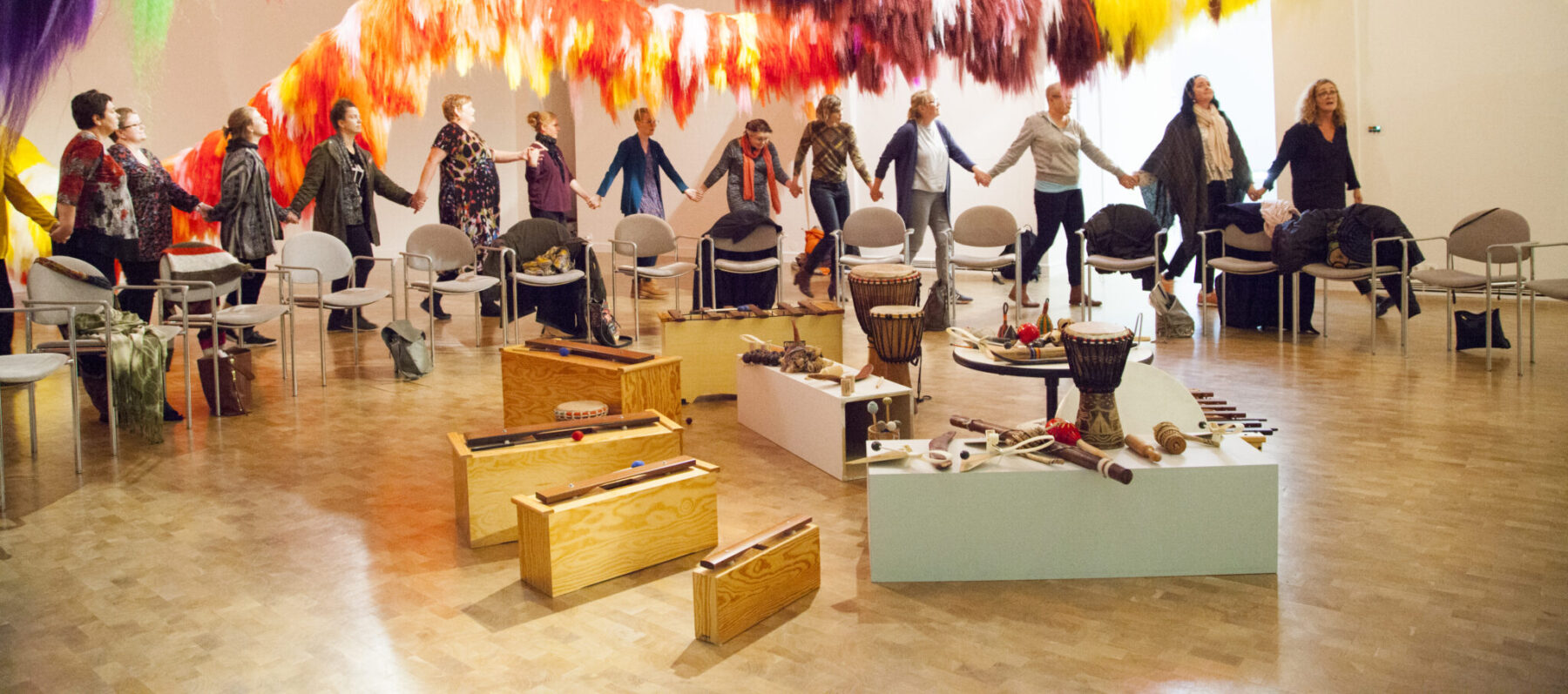

Í department of Art Education Academy of Arts Iceland assimilate students sees diverse methods to that bait arts í learning and job, with emphasis á extensive social and ideological allusions. The Department invites up á master's program and supplementarydiploma studies í pedagogy with special emphasis á arts, master's degree in vocal and instrumental education as well master's and additional diploma programs í arts and welfare.
About the program
The Art Education Department focuses on enhancing students' personal skills through targeted training in setting personal and professional goals that test independence and endurance, along with expressive and mediation skills.
The program includes artists from all arts disciplines who have decided to add to their education in teaching and communication, and also offers art-based general pedagogy programs for those with bachelor's degrees in subjects other than the arts Although students are offered courses and conversation related to their own subjects, the majority of courses are open to everyone, making the department a simmering pot of the arts.
Master's programs and additional diploma programs in art education are aimed at educating people for teaching, as well as thereby strengthening the skills and academic basis for sharing their knowledge in different fields.
Master's and additional diploma programs in arts and welfare aim to increase the accessibility and participation of different groups in art-related projects and events.
The language of instruction in the art education department is Icelandic.
Study structure
The program is diverse and is based on courses in teaching, and psychology, philosophy and sociology, along with training in teaching and sharing arts and projects in the field both within the school system and outside it.
The art education department has several study programs based on different backgrounds and areas of interest of students.
Starting in the fall of 2026, the Master of Education in Teaching Studies (M.Ed.) will be combined with the Master of Arts in Art Education Studies.
To distinguish it, the course master's program in art education studies is now divided into four elective areas:
Methods of art in general teaching
Visual arts
Performing arts
Music
After completion kforehead study
Upon completion of their studies, students receive either a master's degree (6.2), a master's degree (6.1), or an additional diploma (6.1) in art education studies Students have acquired knowledge and experience to work at all school levels as well as carry out different cultural and educational related projects in the community.
In addition to the general rights granted by master's degrees, master's degrees and additional diplomas for further study and work, students receive professional qualifications (license letters) upon graduation The license includes the right of graduated students to call themselves teachers and to work as such in this country at the pre-school, primary and secondary level.
After completing studies in the arts and welfare
Upon completion of their studies, students receive either a master's degree (6.2) or an additional diploma (6.1) in arts and welfare In addition to the general rights granted by master's degrees and additional diplomas for further study and work, students have acquired knowledge and experience in working with different groups on art-related projects.
Study paths
Frequently asked questions
-
What are the access requirements?
Master's in Art Education Studies (MA/M.Art.Ed. / MT)
Access requirements by preferred area:
Visual arts, performing arts and music: Bakkalárgård or an equivalent university degree in arts or design.
Methods of art in general teaching: Bakkalárgård or a similar university degree in subjects other than arts or design.Master's in Vocal and Instrumental Education (MA/M.Mus.Ed. / MT)
Access requirements: Bakkalárgård in music or similar education.Master's program in art education with an advanced program (MA/M.Art.Ed. / MT)
Access requirements: To have completed at least 120 credits or similar studies at bachelor's level in an art form.Additional Diploma in Art Education Studies (Additional Diploma)
Access requirements: Having completed a master's degree (6.2) or a master's degree (6.1) in a profession, i.e. arts, design or other subjects.Master's program for teachers (MA/M.Ed. / MT)
Access requirements: Having completed a bachelor's degree for a teaching license.
Research
The aim of the Laboratory of Art Education Studies is to increase and promote research and development projects in the field of art studies and art education at all school levels in close cooperation with the field. The goal is also to encourage research initiatives and to create conditions to share knowledge and present the results of research in the field, including through conferences and seminars, the publication of academic articles and academic publications and through lectures.
The mission of the laboratory is to be a forum for conversation between art teachers, artists and anyone who conducts research in the fields of art studies, teaching and art communication It covers all arts and will focus on interdisciplinary approaches and relationships with international laboratories.
The aim is to have the widest possible cooperation with those parties working on research and development of the learning and teaching methods of art and creative school work with a focus on contemporary issues, spanning different practices and discourse (arts, education, pedagogy, politics, cultural studies, digital communication, philosophy, museum education and community-based arts) Collaboration and dialogue between arts and other disciplines includes inexhaustible possibilities for research and development projects.
It is important to cultivate close cooperation with the grassroots, professional associations of artists and cultural and artistic activities in the country with the aim of further promoting innovation and supporting the growth spurts of art education on the widest possible basis.
The laboratory operates under the umbrella of the art education department of the Iceland Academy of the Arts and is based there.
Read more